

Leadership development is one of the most important investments an organization can make. Yet many leadership programs fail to create lasting change. Participants attend workshops, complete assessments, receive certificates and return to work with good intentions. A few weeks later, old habits return, teams see little difference and the organization quietly questions the value of its investment.
This raises an important question: why do leadership programs fail despite sincere effort and significant spending?
The answer is rarely one single problem. Leadership development challenges usually come from a combination of unclear goals, weak design, lack of support, poor follow-up and insufficient measurement. As a leadership coach and trainer, Dr. Mathew Thomas has seen that effective leadership training is not about delivering information alone. It is about creating measurable behavioral change that supports business priorities, strengthens teams and builds confident leaders.
In this blog, we explore the most common reasons leadership programs underperform and the best leadership practices organizations can use to build programs that truly work.
1. Lack of Clear Objectives and Business Alignment
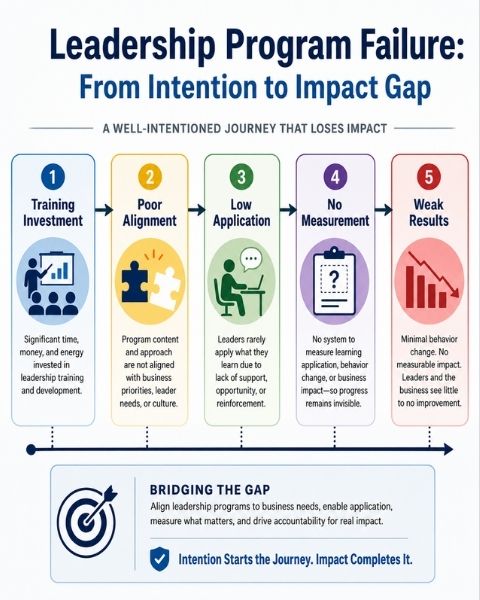 One of the biggest reasons leadership programs fail is that they begin without a clear answer to a simple question: What should change after this program?
Many organizations launch leadership initiatives because leadership development sounds important. However, if the program is not linked to specific business goals, it becomes a generic learning event rather than a strategic intervention.
For example, a company may say it wants to “develop better leaders.” But does that mean improving employee engagement, reducing attrition, strengthening decision-making, preparing successors, building cross-functional collaboration, or improving performance conversations?
Without clarity, the program becomes difficult to design, deliver and measure.
How to fix it
Before launching any leadership initiative, define:
- The business problem the program must solve
- The leadership behaviors that need to improve
- The target audience and their current capability gaps
- The outcomes that will indicate success
- The metrics that will be tracked before and after the program
Effective leadership training begins with alignment. When leadership development is connected to business strategy, participants understand why it matters and organizations can evaluate whether the investment is working.
2. Poorly Designed Curriculum or Irrelevant Content
Another common reason leadership programs fail is that the curriculum does not match the real challenges leaders face. Participants may learn theories, models, or frameworks that sound impressive but do not help them handle difficult conversations, manage conflict, coach teams, influence stakeholders, or make better decisions under pressure.
A leadership curriculum should not be designed around what is easy to teach. It should be built around what leaders must actually do.
A first-time manager, for instance, needs practical skills in delegation, feedback, accountability and team motivation. A senior leader may need advanced skills in strategic thinking, culture-building, influence and change leadership. If both groups receive the same content, the program will feel either too basic or too abstract.
How to fix it
A strong curriculum should include:
- Real workplace scenarios
- Role plays and simulations
- Reflection exercises
- Case discussions
- Peer learning
- Action planning
- Practical tools leaders can use immediately
The best leadership practices are those that help leaders bridge the gap between knowing and doing. Content must be relevant, practical and connected to the participant’s level of responsibility.
3. Insufficient Buy-In from Senior Leadership
Leadership development cannot succeed if senior leaders treat it as an HR activity rather than a business priority. When executives do not sponsor, model, or reinforce the program, participants quickly sense that the initiative is optional.
Senior leadership buy-in is not just about approving a budget. It means actively communicating the importance of the program, participating where appropriate, mentoring emerging leaders and holding managers accountable for applying what they learn.
When senior leaders say leadership development matters but continue rewarding poor leadership behavior, the program loses credibility.
How to fix it
Organizations should involve senior leaders in:
- Defining program goals
- Opening or closing key sessions
- Sharing leadership stories
- Supporting action-learning projects
- Reviewing progress metrics
- Recognizing leaders who demonstrate growth
Visible sponsorship signals that leadership development is not a side activity. It is part of how the organization builds its future.
4. Inadequate Follow-Up and Reinforcement
Leadership is not transformed in a one-day workshop. Yet many programs are still designed as isolated events. Participants attend a session, feel inspired and then return to full inboxes, urgent deadlines and unchanged systems.
Without reinforcement, even the best content fades.
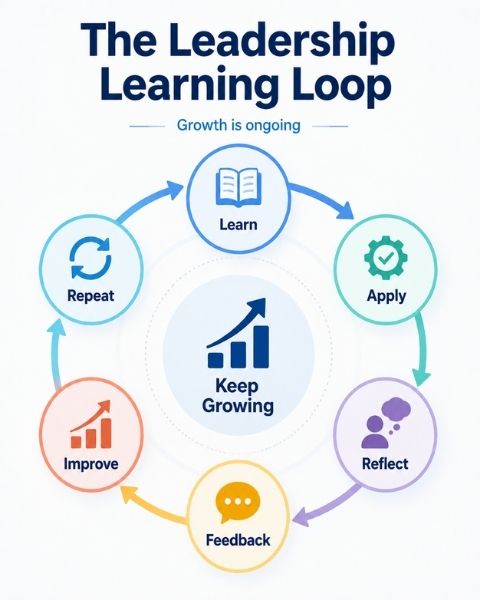
This is one of the most overlooked leadership development challenges. People do not change simply because they understand a concept. They change when they practice, receive feedback, reflect, adjust and try again.
How to fix it
Build reinforcement into the program through:
- Follow-up coaching sessions
- Manager check-ins
- Peer accountability groups
- Practice assignments
- Reflection journals
- Progress reviews
- Post-program learning circles
Leadership coaching success depends heavily on sustained application. The real value of leadership development appears after the classroom, not just during it.
5. Failure to Measure ROI or Track Progress
Many organizations struggle to prove whether their leadership programs are working because they do not define success clearly at the beginning. They may collect participant feedback, but satisfaction scores alone do not prove behavioral change or business impact.
A participant may enjoy a workshop and still fail to lead more effectively.
To understand why leadership programs fail, organizations must examine what they are measuring. If measurement stops at attendance and feedback forms, the organization misses the bigger picture.
How to fix it
Track multiple levels of progress, such as:
- Participant satisfaction
- Knowledge gained
- Behavioral change
- Team engagement
- Retention of high-potential employees
- Internal promotions
- Productivity or performance indicators
- Manager and stakeholder feedback
The goal is not to reduce leadership development to numbers alone. The goal is to combine qualitative and quantitative insights so the organization can improve the program over time.
6. Over-Reliance on One-Size-Fits-All Programs
Generic leadership programs often fail because leaders do not all have the same needs. Different industries, cultures, roles and career stages require different forms of development.
A one-size-fits-all approach may be convenient, but convenience rarely produces transformation.
For example, a technically strong manager may need help developing emotional intelligence. Another leader may need support in strategic communication. A high-potential employee may need confidence-building and exposure to decision-making. Treating all three as if they need the same intervention limits the impact of the program.
How to fix it
Use a segmented approach based on:
- Leadership level
- Role requirements
- Assessment results
- Business priorities
- Individual development goals
- Team or department challenges
Personalization makes leadership development more meaningful and increases the chances of real application.
7. Lack of Personalized Development Plans
Leadership programs often fail when they focus on group learning but ignore individual growth paths. Every participant brings different strengths, blind spots, motivations and challenges.
A personalized development plan helps convert learning into action. It gives each leader clarity on what they need to work on, how they will practice and how progress will be reviewed.
Without this plan, participants may leave the program inspired but uncertain about their next steps.
How to fix it
Each participant should have a development plan that includes:
- Two or three priority leadership goals
- Specific behaviors to practice
- Support required from managers or mentors
- Time-bound action steps
- Feedback mechanisms
- Review dates
This is where a skilled leadership coach and trainer can add significant value. Through coaching conversations, leaders can identify patterns, challenge assumptions and build practical strategies for growth.
8. Insufficient Time and Resources
Leadership development requires time, attention, budget and organizational commitment. When programs are rushed, underfunded, or squeezed between competing priorities, results suffer.
Organizations sometimes expect deep transformation from a short workshop. While a workshop can be useful, it cannot replace a structured development journey.
Leaders also need time to practice what they learn. If they return to an environment that rewards constant urgency and leaves no space for reflection, coaching, or development conversations, the program’s impact will be limited.
How to fix it
Organizations should allocate:
- Adequate learning time
- Budget for quality facilitation and coaching
- Manager support
- Digital or physical learning resources
- Time for practice and reflection
- Follow-up sessions
Leadership development should be treated as an investment in organizational capability, not as an expense to be minimized.
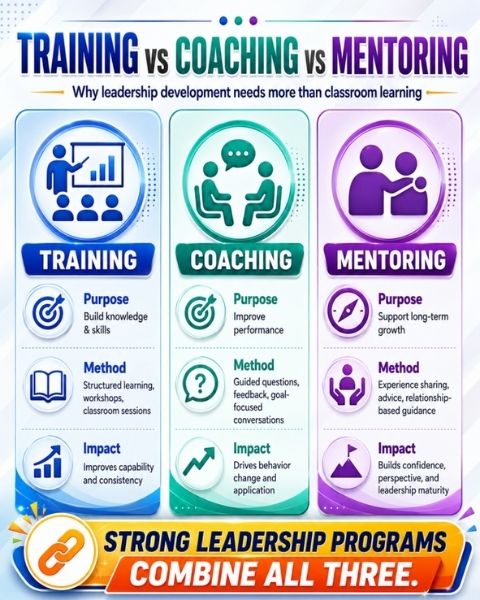
Training builds awareness. Coaching and mentoring help convert awareness into action.
A leadership program without coaching may provide useful information but fail to address the personal beliefs, habits, fears and communication patterns that shape leadership behavior. Leaders often need a safe space to discuss real challenges, receive honest feedback and explore new approaches.
Mentoring also plays a valuable role by connecting developing leaders with experienced professionals who can share perspective, guidance and organizational wisdom.
How to fix it
Include coaching and mentoring through:
- One-on-one executive coaching
- Group coaching sessions
- Internal mentoring programs
- Peer coaching circles
- Manager-led development conversations
Leadership coaching success is often seen when leaders become more self-aware, intentional and consistent in how they lead others.
The Role of the Organization and the Individual
Successful leadership development is a shared responsibility.
The organization must create the right conditions for growth. This includes clear expectations, supportive systems, leadership role models, meaningful feedback and opportunities to apply new skills.
The individual leader must also take ownership. No program can create change if the participant is passive. Leaders must be willing to reflect honestly, receive feedback, practice new behaviors and stay committed even when growth feels uncomfortable.
The most effective leadership initiatives create a partnership between the organization, the participant, the manager and the coach or trainer.
Key Components of Successful Leadership Programs
To avoid the common reasons leadership programs fail, organizations should design leadership development as a journey rather than an event.
A successful program should include:
- Clear alignment with business goals
- Defined leadership competencies
- Practical and relevant curriculum
- Senior leadership sponsorship
- Individual assessments
- Personalized development plans
- Coaching and mentoring support
- Opportunities for real-world application
- Follow-up and reinforcement
- Progress tracking and ROI measurement
When these elements work together, leadership development becomes more than training. It becomes a structured path for building better leaders, stronger teams and healthier organizations.
Conclusion: Build Leaders, Not Just Programs
Leadership programs fail when they are treated as isolated training events, disconnected from strategy, behavior and business outcomes. But with the right design, support and follow-through, leadership development can become one of the most powerful drivers of organizational success.
The key is to move from information delivery to behavior change. Leaders need relevant learning, practical tools, honest feedback, coaching support and a system that encourages them to apply what they learn.
For organizations wondering how to improve leadership development, the first step is reflection. Are your current programs aligned with business goals? Are participants applying what they learn? Are managers reinforcing new behaviors? Are you measuring progress beyond attendance and feedback forms?
As a leadership coach and trainer, Dr. Mathew Thomas helps organizations design and deliver leadership initiatives that are practical, personalized and results-focused. Whether you are building new managers, strengthening senior leaders, or creating a leadership pipeline, expert guidance can help turn leadership development challenges into measurable growth.
Call to Action:
Take a closer look at your current leadership development strategy. If your programs are not producing the impact you expected, it may be time to redesign the approach. Connect with Dr. Mathew Thomas to explore how effective leadership training, coaching and mentoring can help your leaders grow with clarity, confidence and purpose.