

Psychological Safety in Indian Work Culture: Why Leaders Must Make It Safe to Speak Up
Indian workplaces are changing rapidly. Hybrid teams, younger employees, digital transformation, global clients and increasing performance pressure are reshaping how organizations function. Yet one leadership challenge continues to sit at the heart of workplace effectiveness: do people feel safe enough to speak honestly?
This is where psychological safety becomes critical.
Psychological safety is the shared belief that people can express ideas, ask questions, admit mistakes, challenge assumptions and raise concerns without fear of humiliation, punishment or career damage. In Indian work culture, where respect for hierarchy, seniority and authority remains deeply embedded, psychological safety is not a soft concept. It is a strategic leadership capability.
Over the years, in my work with leaders, teams and organizations, I have seen one pattern repeatedly: people rarely stop contributing because they have nothing to say. They stop contributing because they are unsure whether it is safe to say it.
Leaders cannot demand innovation while discouraging honest conversations. They cannot ask for ownership while punishing mistakes. They cannot expect agility from teams that are emotionally guarded. Psychological safety is not merely an HR theme. It is a leadership discipline that determines whether organizations learn, adapt and grow.
Why Psychological Safety Matters in Indian Workplaces
Many Indian organizations are built around strong relationships, loyalty and respect for authority. These qualities can create stability, commitment and continuity. However, when hierarchy becomes excessive, it can also create silence.
Employees may hesitate to question a senior leader. Junior managers may avoid sharing bad news. Teams may agree in meetings but disengage in execution. People may remain polite on the surface while holding back important concerns underneath.
This silence is expensive.
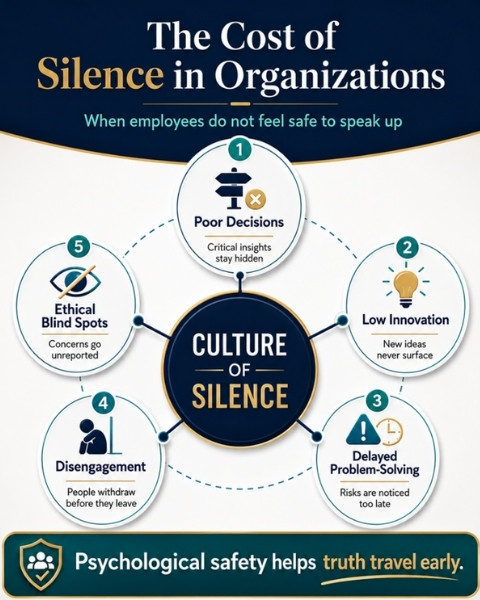
When people do not speak up, problems remain hidden. Poor decisions go unchallenged. Innovation slows down. Ethical risks increase. High-potential employees emotionally withdraw before they physically resign. In such environments, leaders may believe everything is under control because no one is openly disagreeing. In reality, the organization may be losing insight, trust and speed.
Psychological safety allows teams to surface reality early. It helps leaders hear what they need to hear, not only what others think they want to hear.
The Indian Context: Respect Should Not Become Fear
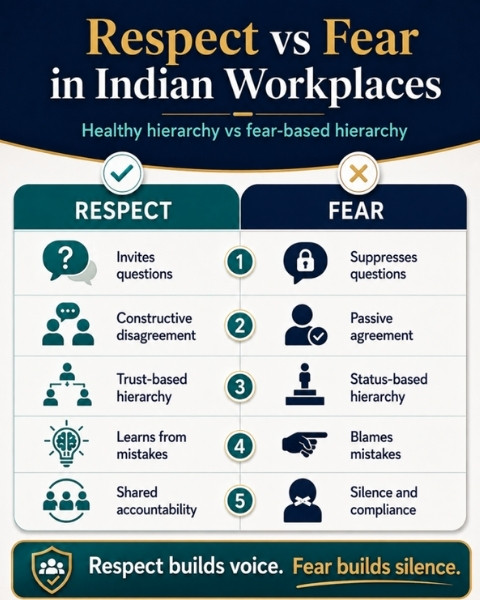
In India, respect is often expressed through deference. Employees may use silence as a sign of politeness. They may avoid disagreement to preserve relationships or protect a senior person’s image. This is especially visible in family-owned businesses, traditional corporations, public sector environments and even fast-growing startups led by strong founders.
The problem is not respect. Respect is valuable. The problem begins when respect becomes fear.
A psychologically safe Indian workplace does not remove hierarchy. It humanizes hierarchy. It allows authority to coexist with openness. It enables a senior leader to say, “I want your honest view” and mean it. It allows a junior employee to say, “I may be wrong but I see a risk here” without worrying about being labelled negative, disloyal or difficult.
This distinction is vital. Psychological safety is not about making workplaces casual, careless or overly permissive. It is about creating a disciplined environment where truth can travel upward, across teams and across functions.
In my experience as a facilitator, this is often the turning point in leadership conversations. Once leaders understand that openness does not weaken authority, they begin to see psychological safety as a source of stronger decision-making.
What Psychological Safety Is Not
Many leaders misunderstand psychological safety. They assume it means avoiding accountability or making everyone comfortable. That is incorrect.
Psychological safety does not mean lowering standards. It means raising the quality of conversation.
It does not mean people can say anything without responsibility. It means people can speak with courage, respect and evidence.
It does not mean mistakes are ignored. It means mistakes are examined without blame so the system can improve.
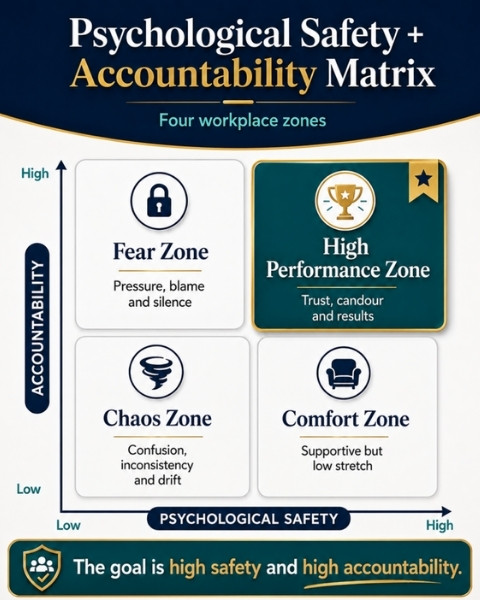
High-performing teams need both psychological safety and accountability. Safety without accountability creates comfort. Accountability without safety creates fear. The most effective leadership cultures create both.
This is an important distinction for Indian organizations. We often have strong accountability structures but weak conversational safety. The result is compliance without true commitment. When psychological safety and accountability work together, teams become more honest, more responsible and more performance-oriented.
Leadership Behaviours That Build Psychological Safety
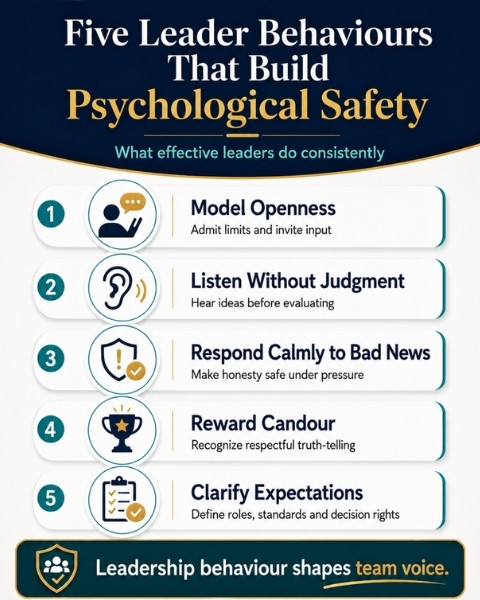
Psychological safety is not created through posters, policies or town halls alone. It is built through repeated leadership behaviour.
First, leaders must model openness. When leaders admit what they do not know, acknowledge mistakes and invite alternative views, they make it easier for others to do the same.
Second, leaders must listen without immediate judgment. In many Indian workplaces, employees stop speaking not because they lack ideas but because past attempts were interrupted, dismissed or punished.
Third, leaders must respond well to bad news. The real test of psychological safety is not how a leader behaves when things go well. It is how the leader responds when a team member raises a problem, points out a delay or admits an error.
Fourth, leaders must reward candour. When someone identifies a risk early, challenges groupthink or offers a dissenting view respectfully, that behaviour should be recognized.
Fifth, leaders must clarify expectations. Psychological safety grows when people know what is expected, how decisions are made and where they have permission to contribute.
In leadership development work, I often remind leaders that people learn the culture by observing what is rewarded, what is ignored and what is punished. A single defensive reaction from a leader can silence a team for months. A single thoughtful response can open the door to more honest dialogue.
Psychological Safety and Innovation
Innovation requires experimentation. Experimentation involves uncertainty. Uncertainty produces mistakes. If mistakes are punished harshly, employees will choose safety over creativity.
This is especially relevant for Indian organizations competing in technology, healthcare, education, consulting, manufacturing, financial services and entrepreneurship. These sectors need employees who can think independently, challenge assumptions and solve complex problems.
A team that fears embarrassment will not innovate. A team that fears blame will hide weak signals. A team that fears hierarchy will wait for instructions.
Psychological safety changes this pattern. It encourages employees to contribute before they are certain. It makes brainstorming more honest. It allows teams to learn faster from failure. It also helps organizations retain younger professionals who expect voice, dignity and inclusion at work.
For leaders, this requires a mindset shift. Innovation cannot be treated only as a process issue. It is also a trust issue. People will not offer bold ideas in an environment where they feel emotionally exposed or professionally unsafe.
Psychological Safety and Employee Well-Being
Workplace well-being is not only about wellness programs. It is also about the emotional climate of daily work.
Employees who constantly monitor their words, hide concerns or suppress disagreement experience emotional fatigue. Over time, this can lead to disengagement, stress and burnout. In contrast, psychologically safe environments reduce unnecessary emotional labour. People spend less energy protecting themselves and more energy contributing to the work.
This is especially important in Indian work culture, where many professionals feel pressure to appear agreeable, available and resilient even when they are struggling. A psychologically safe workplace gives people permission to raise concerns before stress becomes crisis.
The future of work will not be shaped only by technology. It will be shaped by the quality of human trust inside organizations.
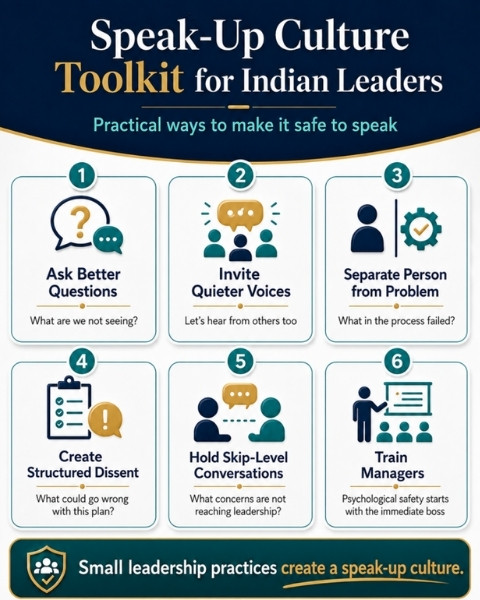
How Indian Leaders Can Start Building Psychological Safety
Leaders can begin with simple but powerful practices.
Ask better questions in meetings. Instead of asking, “Does everyone agree?” ask, “What are we not seeing?” or “What would make this decision fail?”
Invite quieter voices. Do not allow meetings to be dominated only by senior people or outspoken personalities.
Separate the person from the problem. When mistakes happen, ask, “What in the process allowed this?” before asking, “Who did this?”
Create structured dissent. Assign someone to challenge the proposal before major decisions are finalized.
Hold skip-level conversations. Employees often speak more freely when they are invited into safe, structured conversations beyond their immediate reporting line.
Train managers, not just senior leaders. Psychological safety is experienced most directly through the immediate manager. A respectful CEO cannot compensate for a fear-based supervisor.
For Indian leaders, these practices may appear simple but they require consistency. Psychological safety is not built by one inspirational speech. It is built through everyday responses in meetings, reviews, one-on-one conversations and moments of pressure.
My Perspective: Safety Is a Leadership Practice
After working with leaders across different sectors and organizational cultures, I have come to believe that culture is not what leaders announce. Culture is what people experience when there is pressure.
When deadlines are tight, when mistakes happen, when clients are unhappy and when performance is under review, employees observe how leaders behave. Those moments either build trust or break it.
Psychological safety in Indian work culture requires leaders who are emotionally mature, self-aware and willing to examine their own authority. It requires facilitators who can help teams have difficult conversations without defensiveness. It requires organizations that see trust as a performance driver, not a feel-good value.
The next generation of Indian workplaces will not be built by leaders who command silence. They will be built by leaders who create intelligent, respectful and courageous dialogue.
Conclusion
Psychological safety is no longer optional for Indian organizations. It is essential for innovation, retention, ethical decision-making, collaboration and leadership effectiveness.
In a culture where hierarchy has often shaped communication, psychological safety offers a new leadership possibility. It does not reject Indian values of respect and relationship. It strengthens them by adding honesty, trust and shared responsibility.
For every leader, the question is simple: are people telling you the truth early enough for you to act on it?
The answer may reveal the real strength of your culture.
Frequently Asked Questions on Psychological Safety in Indian Work Culture
1. What is psychological safety in the workplace?
Psychological safety is the belief that employees can speak up, ask questions, share ideas, admit mistakes and raise concerns without fear of embarrassment, punishment or career damage. In a workplace, it allows people to contribute honestly without constantly protecting themselves.
2. Why is psychological safety important in Indian work culture?
Psychological safety is especially important in Indian work culture because many organizations operate with strong hierarchy, respect for seniority and indirect communication. While these cultural traits can create stability, they can also discourage employees from challenging assumptions, questioning decisions or sharing difficult truths. Psychological safety helps balance respect with openness.
3. Does psychological safety reduce accountability?
No. Psychological safety does not reduce accountability. In fact, it strengthens accountability by making it easier for people to discuss mistakes, risks and performance gaps honestly. High-performing teams need both psychological safety and accountability. Safety without accountability can create comfort. Accountability without safety can create fear.
4. How can leaders build psychological safety in Indian teams?
Leaders can build psychological safety by asking better questions, listening without judgment, inviting quieter voices, responding calmly to bad news and separating the person from the problem. They must also reward respectful candour and make it clear that speaking up is valued, not punished.
5. What are examples of psychological safety at work?
Examples include a junior employee challenging a project assumption respectfully, a team member admitting a mistake early, a manager asking for dissenting views before making a decision and employees raising ethical concerns without fear of retaliation. These behaviours show that the workplace values truth over silence.
6. What happens when psychological safety is missing?
When psychological safety is missing, employees often remain silent even when they see problems. This can lead to poor decisions, low innovation, delayed problem-solving, disengagement and ethical blind spots. Leaders may believe there is agreement when there is only compliance.
7. Is psychological safety only an HR responsibility?
No. HR can support psychological safety through policies, training and culture-building initiatives but the daily experience of psychological safety is shaped by leaders and managers. Employees usually judge whether it is safe to speak up based on how their immediate manager responds under pressure.
8. How is psychological safety connected to innovation?
Innovation depends on experimentation, honest feedback and the willingness to challenge existing ideas. If employees fear blame or embarrassment, they will avoid taking creative risks. Psychological safety creates the trust required for people to share new ideas, test assumptions and learn from failure.
9. Can psychological safety exist in hierarchical organizations?
Yes. Psychological safety does not eliminate hierarchy. It makes hierarchy healthier. In a psychologically safe hierarchical organization, leaders still make decisions but they actively invite honest input, listen to different perspectives and allow truth to move upward without fear.
10. What is the first step leaders can take to improve psychological safety?
The first step is to change the quality of questions leaders ask. Instead of asking, “Does everyone agree?” leaders can ask, “What are we missing?” “What risks do you see?” or “What would make this decision fail?” Better questions create better conversations.
